Anti-obesity Drugs |
Introduction
According to the World Health Organization (WHO), overweight and obesity are defined as abnormal or excessive fat accumulation that poses a risk to health. One commonly used method to assess obesity is the Body Mass Index (BMI), which is calculated using the formula: body weight (kg)/height² (m²). For Chinese adults in the Hong Kong Special Administrative Region, a BMI of 25.0 kg/m² or above is classified as obese.
Obesity significantly increases the risk of developing various chronic diseases, including type 2 diabetes, cardiovascular diseases, hypertension, hypercholesterolaemia, cerebrovascular disease, sleep apnoea and certain types of cancer, such as breast, prostate, colorectal and endometrial cancers.
The primary cause of obesity is an energy imbalance between the calories consumed through food and beverages and the calories expended through basal metabolism and physical activity. Therefore, adopting a healthy lifestyle is fundamental in reducing the risk of obesity. Members of the public are encouraged to maintain a balanced diet, avoid alcohol consumption, engage in regular physical activity, and minimize sedentary behaviour.
Anti-obesity Drugs
In Hong Kong, medicines currently registered for the treatment of obesity include liraglutide, naltrexone/bupropion, orlistat, phentermine, semaglutide and tirzepatide. In general, these medicines are intended to be used as an adjunct to a reduced-calorie diet and increased physical activity in obese patients who meet specific eligibility criteria. These criteria vary by product and must be strictly adhered to in accordance with the product label-specified criteria.
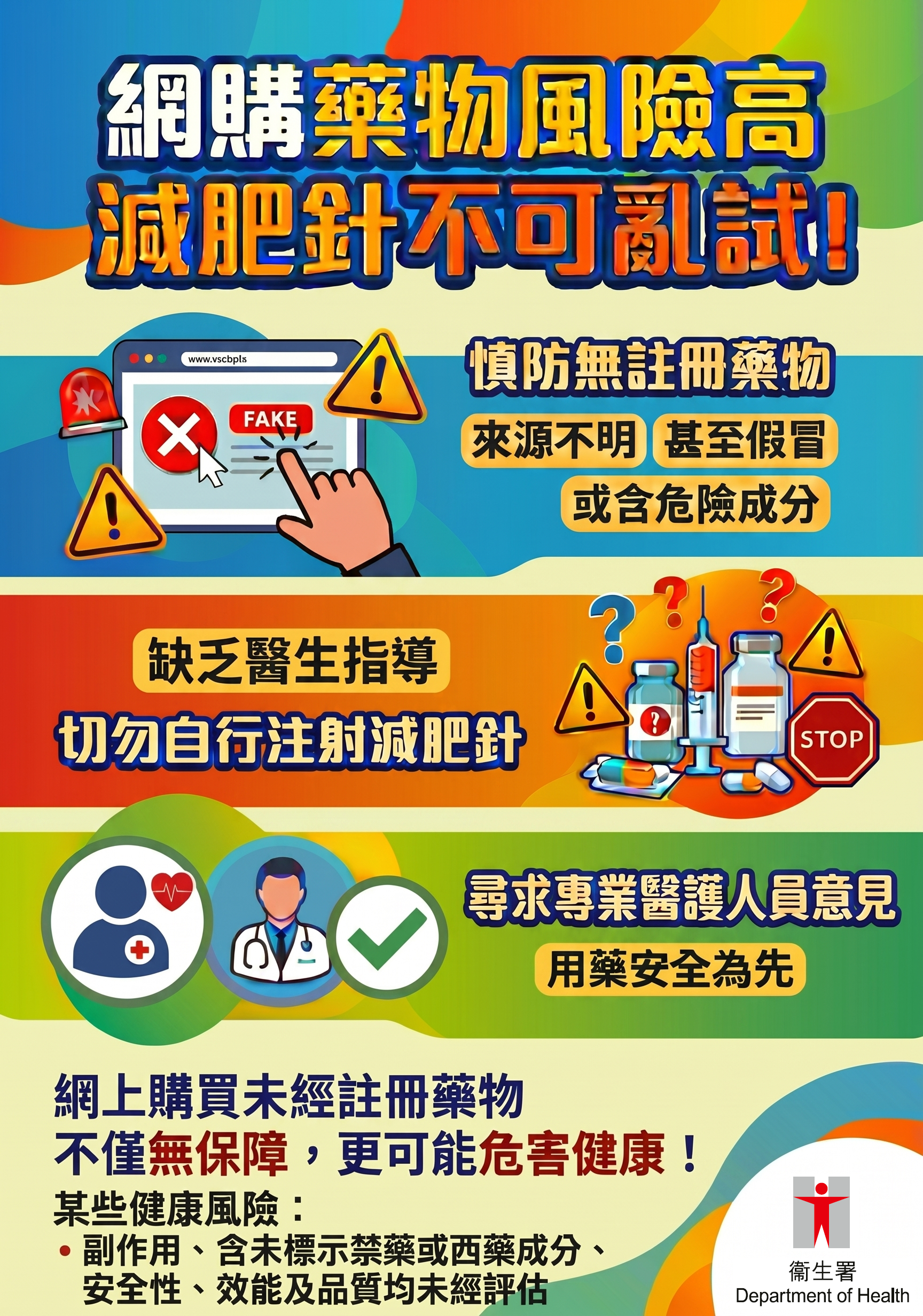
In Hong Kong, almost all of the anti-obesity drugs are prescription-only medicines, and should only be used under the close supervision by a doctor. Members of the public should consult a doctor or pharmacist before using any anti-obesity medication, and strictly adhere to the prescribed treatment plan.
|
Summary of Anti-obesity Drugs*
Drugs
| Common side effects
| Precautions
|
- Liraglutide
- Semaglutide
- Tirzepatide
|
- For liraglutide and semaglutide: Headache, nausea, vomiting, diarrhoea, delayed gastric emptying
- For tirzepatide: Hair loss, nausea, diarrhoea, dizziness, constipation, vomiting, hypersensitivity reactions, delayed gastric emptying
|
- Cases of pulmonary aspiration have been reported in patients receiving GLP-1 receptor agonists undergoing general anaesthesia or deep sedation. Therefore, the increased risk of residual gastric content due to delayed gastric emptying should be considered prior to performing procedures with general anaesthesia or deep sedation.
- For liraglutide and semaglutide: Diabetic ketoacidosis has been reported in insulin-dependent patients after rapid discontinuation or dose reduction of insulin.
|
|
|
- Headache, constipation, nausea, vomiting, anxiety, insomnia, dizziness, tremor, fast or irregular heartbeat, increased blood pressure, lethargy (lack of energy), hot flush, tinnitus (ringing in the ears), hair loss, rash, excessive sweating, irritability
|
- There have been reports of depression, suicidal thoughts, and suicide attempts during treatment with this medicine. Patients who feel depressed, have thoughts of suicide, have a history of attempting suicide, panic attacks or any other mental health problems should inform their doctor before taking this medicine.
|
|
|
- Abdominal pain, headache, diarrhoea, gastrointestinal disorders, oily discharge, fatty/oily stools, increased defecation, faecal incontinence, tooth/gum disorder, irregularity of menstrual cycle
|
- Orlistat may reduce the absorption of some fat-soluble nutrients, such as beta-carotene, vitamin E, etc.
- Contraindicated in pregnancy, or in women currently planning to become pregnant, or while breast-feeding.
- The use of an additional contraceptive method is recommended to prevent possible failure of oral contraception that could occur in case of severe diarrhoea.
- Patients with kidney disease should consult a doctor before starting treatment.
|
|
|
- Nausea, vomiting, dry mouth, unpleasant taste, diarrhoea, constipation,increased heart rate, high blood pressure, dizziness
|
|
General Advice*
- Always consult your doctor to determine the most appropriate weight management treatment plan for your individual needs.
- Anti-obesity medications should be used under the supervision of a doctor.
- Follow the prescribed dosage and administration instructions strictly.
|
Advice to the Public
|
Storage
Anti-obesity drugs should be stored according to the instructions stated on their labels. Oral anti-obesity drugs are typically kept in a cool, dry place, while injectable anti-obesity drugs are usually stored in refrigerators unless otherwise specified. Always keep medications out of reach and sight of children to prevent accidental ingestion.
* This information may not cover all possible side effects, precautions, or medical advice. Always consult your healthcare professional for guidance.
|
Drug Office
Department of Health
May 2026
|
|
|